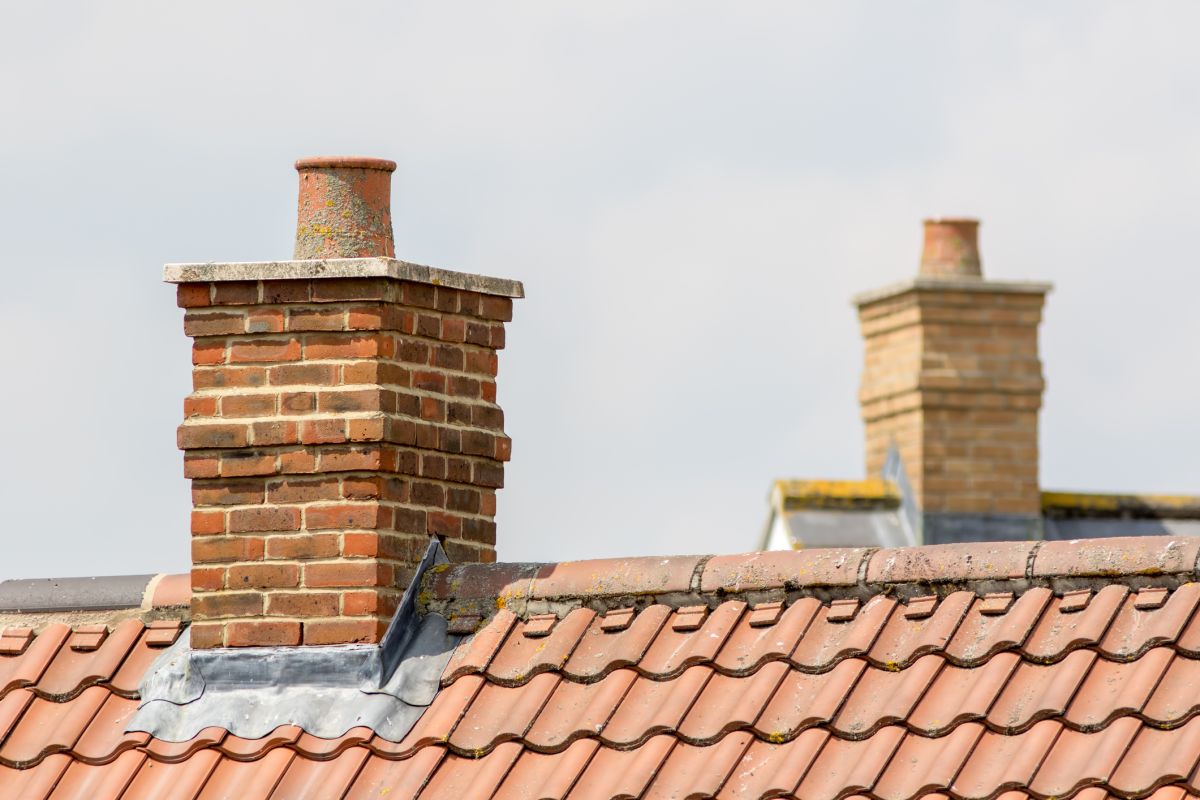
As the chimney is exposed on your roof and is often the highest point of your house, it is more vulnerable to the weather than most, which can necessitate professional repairs at times.
This is especially important if you have a fire or wood-burning stove you actively use, as your chimney needs to function effectively to channel harmful gases away from your home. A broken chimney, therefore, becomes actively dangerous.
Aside from plumes of black smoke entering your home, there are other telltale warning signs you should look out for in order to avoid a chimney collapse.
What Are The Signs Of A Cracked Chimney Stack?
The most common major issue with a chimney is damage to its stack, the topmost part of the chimney which sticks out from the top of the building.
From small damage to the crown at the very top to mortar issues throughout the stack, it can be potentially dangerous to leave it as it is.
The easiest way to spot this, aside from climbing onto your roof and looking for visible cracks, is to look for chunks of loose mortar, bricks or water leaks entering your fireplace, as well as signs of water staining and damp.
What Should You Do If You See Rust In Your Chimney?
Some parts of your chimney, such as the damper and the firebox, are made of metal, which are typically necessary for operating a fire safely.
If you can see rust in the firebox or the damper, it means that water is getting inside the chimney, something that should be impossible if the fireplace is working correctly.
Rust can cause metal to become brittle, fragile and weak, which can cause vital parts of your chimney to seize up and no longer work properly.
Whilst these parts need to be replaced by a professional, it is important to check your chimney as well to ensure that it is working or potentially contributing to this corrosion.
How Can You Tell If Creosote Has Built Up In Your Chimney?
One major danger of an old chimney is the build-up of creosote, the tar, soot and residue from coal and/or wood.
It can be hard to spot creosote if you do not know where to look, as the glossy deposits can appear similar to regular soot if you cannot tell the difference, but there are some other telltale signs to look out for:
- It is harder to keep a fire lit.
- Smoke enters the room when you light a fire.
- You get a distinct smoky smell when the fireplace is in use.
What makes creosote so dangerous is that it is a highly flammable material, and it can very easily catch fire inside your chimney, something that often leads to a loud rush of air akin to a freight train moving.
At this point, you need to call the emergency services, but spotting the early signs of creosote will allow you to arrange an inspection from a chimney expert who can see if a sweep will be enough or if parts of your chimney need to be repaired.
