
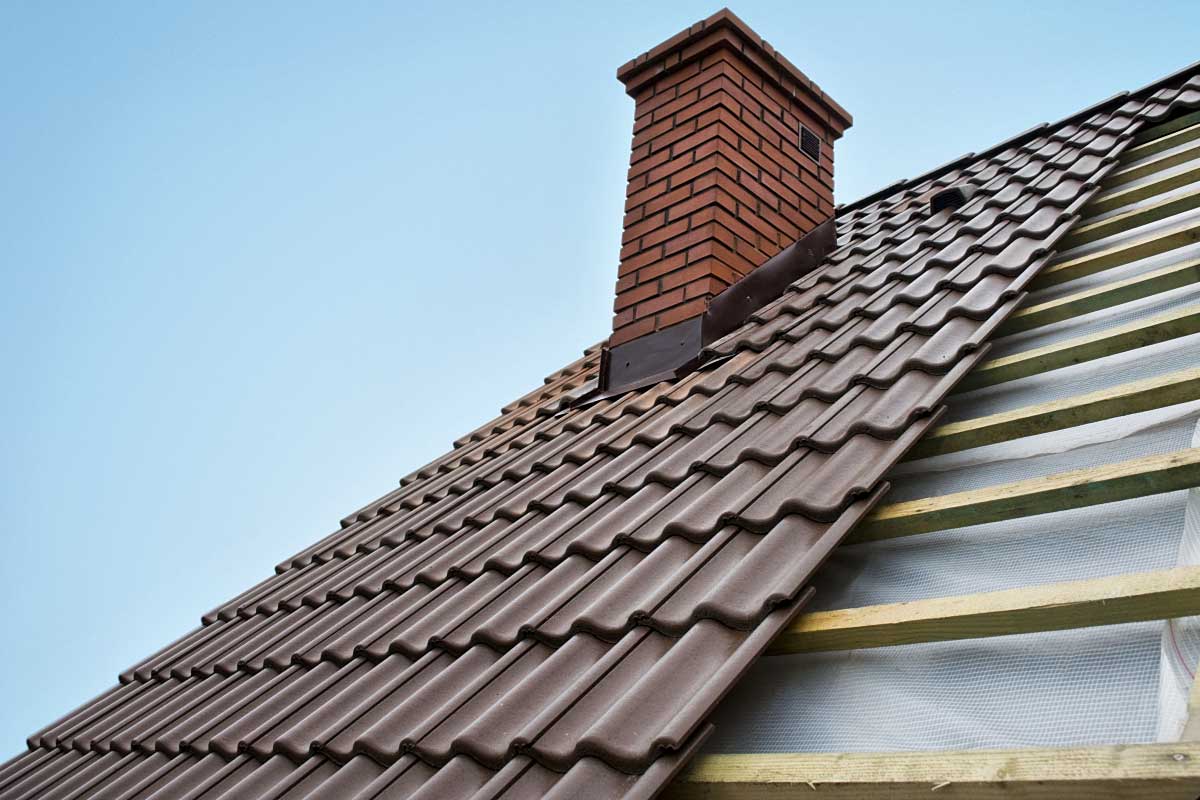
There are different ways in which a chimney can become weakened and pose a potential hazard to people and property below. It may be damaged by stormy weather, or it could be weakened by water ingress that leads to freezing. Failures to maintain it, for example, by not correcting loose lead flashing, can accelerate deterioration.
A key question is just how much your chimney may be weakened by this combination of weathering and a lack of action to fix issues with it. When does it reach the point where the likelihood of it toppling is significant?
It may be obvious you need chimney repairs if, for example, some debris has already fallen, as may happen in a storm. That may be a signal that the next storm could bring it down. True, the south-west of England is far from being the region that suffers worst from storms, notwithstanding the recent Storm Bram, but that is no reason for complacency.
Was The Recent Lancashire Earthquake Unusual?
However, you may also give some thought to another issue: earthquakes.
Britain may not suffer the kind of huge and deadly earthquakes seen in far-off countries that occasionally fill the news headlines, as the UK is located far away from the edges of any of the Earth’s tectonic plates. However, minor seismic events do happen.
Earlier this month, a quake measuring 3.3 on the Richter scale occurred in northern England, with its epicentre in Lancashire. This shook houses in places like Lancaster and Cumbrian towns like Ulverston.
This was not even the most powerful earthquake this year, with a quake measuring 3.9 occurring in October, centred on Comrie in Perthshire.
Although houses were shaken by the Lancashire earthquake, there were no reports of structural damage. However, chimney pots and loose tiles certainly can fall in a stronger tremor, and these do occur from time to time. What if the next quake happened in this part of Britain?
Since 1900, there have been 59 quakes measuring over 4 on the Richter scale. Because the scale goes up in multiples, a 4.0 quake is twice as strong as one measuring 3.9, although how strong it feels can depend on other factors, such as how deep below the surface the epicentre is.
The last of these that would have been strongly felt in the Bristol-Bath area was a quake measuring 4.3 near Swansea in 2018, one of three in South Wales since 1974. Parts of the south west would also have felt quakes in the West Midlands measuring 4.8 in 2002 and 4 in 2000.
How Does The Risk To Chimneys From Quakes Compare With Bad Weather?
From the above data, it may be concluded that the risk that any minor quake topping a loose chimney is far from negligible. Had the quake in Lancashire been stronger, some weak chimneys may have fallen.
However, at the same time, some perspective is needed; such events are much less frequent than high winds and heavy rain.
Therefore, while the possibility of some sort of seismic event might add to the reasons to get your chimney checked out if you suspect there is any problem with it (and don’t hesitate to book some repairs if you know there is an issue), the greater risk is that a storm or the effects of freezing weather will bring it crashing down.
