Flat roofs are common in Bristol and the wider area, particularly on flats, house extensions, and garages. However, they can be prone to certain issues, particularly if they are old, have been damaged by weather or were not properly installed.
Common problems can include: blistering where air or water creates bubbles under the roof surface; water ponding; cracks and surface wrinkles; moss growth, and gaps where the materials have contracted with temperature changes.
If you see any of these problems, your roof may need repairing or replacing. Untended, they can cause leaks that lead to damp, water damage and mould problems in your property.
What are flat roofs made of?
Flat roofs have been part of home building for centuries in warmer countries such as Greece and Spain. In the UK, the familiar domestic flat roofs became common in the early 20th century when builders began using ‘tar paper’ or mineral felt for more efficient installation.
Mineral felt is a bitumen-based material that comes in rolls and sheets. The top of it is coated with grains of mineral for protection from the weather and sun. Today, roofing felt is not ‘paper’ but reinforced with fibreglass or polyester.
Felt roofing is installed with the use of applied heat to melt the bitumen and seal the panels of the felt together to prevent leaks. Mineral felt does, however, have a limited lifespan and is prone to weather, organic and UV degradation.
Construction technology has moved on in the last century and we now have newer, more reliable materials for covering a flat roof. We offer two of these: EPDM rubber roofing and GRP or fibreglass roofing.
What is an EPDM roof?
EPDM stands for ethylene polypropylene diene monomer, a very durable rubber material that can withstand extreme conditions.
It is a synthetic single-ply membrane that can cover up to 150 square metres of a flat roof. It comes in thicknesses of 1mm or 1.5mm. EPDM roofing is flexible enough to be able to expand and contract with temperature changes.
This type of roofing is safer to install than bitumen-based felts as it is glued into place and then trimmed to fit. Compared to older felts, it is easier to maintain and has an expected lifespan of over 50 years.
What is a GRP or fibreglass roof?
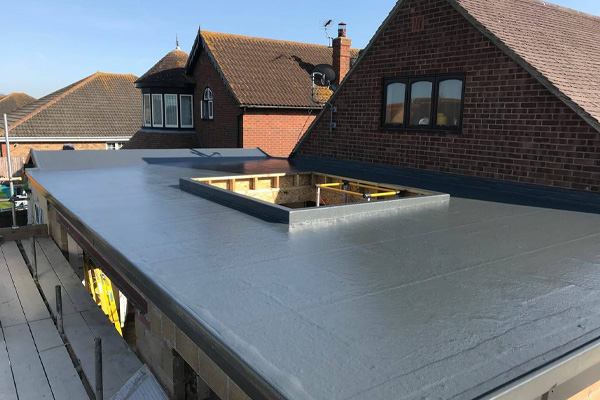
Glass reinforced polyester, or GRP, is a type of composite roofing material. It is the modern equivalent of felt roofing. However, it is far more durable and offers better insulation than the older materials.
GRP is a cold resin, made of a thermoset polyester shot through with fine strands or fibres of glass. The material is even strong enough to walk on and is very resistant to damage, with a lifespan of up to 30 years, giving excellent longevity and value for money.
The roofing is cold-installed, unlike traditional mineral felts, which means it is safer for roofing contractors to install. It is easy for professionals to repair any damage that might occur.
Due to the lack of seams or joins, the waterproofing is far superior to that of mineral felt. It can also be installed in different colours to suit the aesthetic needs of the building.
If you have a flat roof in need of repair or replacement, contact us about your roofing options or ask for a quote.
